

Appointments
+(603) 5515 1966
General Line
+(603) 5515 1888

 October 19, 2026

Screens are now part of everyday childhood. Children use televisions, tablets, smartphones and computers for entertainment, communication, schoolwork and learning. For parents, this can raise an important question: How much screen time is safe for children? There is no single number that applies to every child or every situation. Age, the type of content, the purpose of screen use, sleep, physical activity and family routines all matter.
For younger children, health authorities generally recommend keeping recreational screen time low. For older children and teenagers, the focus is increasingly on balancing screen use with sleep, physical activity, school, family time and other important activities. The goal is not necessarily to eliminate screens. Instead, parents can help children develop healthy and balanced screen habits that support their physical, emotional and social wellbeing.
Screen time refers to time spent using devices with screens, including:
Not all screen time is the same. For example, a child completing homework on a computer is using a screen differently from a child watching videos for several hours. A video call with grandparents is also different from passive scrolling through social media. This is why quality, context and timing are important alongside the total number of hours.
Recommendations vary by age and by health authority. For children under five, the World Health Organization (WHO) provides specific guidance on sedentary screen time.
The WHO recommends no sedentary screen time for infants under 1 year. Instead, babies benefit from interactive activities such as talking, singing, reading, floor-based play and supervised physical activity.
For 1-year-olds, sedentary screen time is not recommended by the WHO. This is an important stage of development when children benefit from exploring their environment, moving, playing and interacting directly with caregivers.
For children aged 2, the WHO recommends no more than 1 hour of sedentary screen time per day, with less being better.
Children aged 3-4 should have no more than 1 hour of sedentary screen time per day, with less being better.
There is less emphasis on one universal daily screen-time limit for school-aged children across international guidelines. Instead, parents should consider whether screen use is interfering with sleep, physical activity, learning, family relationships and other healthy activities.
For example, Canadian 24-hour movement guidelines recommend no more than 2 hours per day of recreational screen time for children and adolescents aged 5-17. Screen use for schoolwork is different from recreational screen time, so families should consider these separately.
Screens themselves are not necessarily harmful. The concern is often what excessive or poorly timed screen use replaces. If children spend many hours sitting in front of screens, they may have less time for:
WHO notes that higher levels of sedentary behaviour in children and adolescents are associated with several less favourable health outcomes, including reduced sleep duration and poorer physical health indicators.
Children need regular movement for healthy growth and development. Extended periods of sedentary screen use can reduce opportunities for active play and exercise. For children under five, WHO recommends substantial amounts of physical activity throughout the day. For example, children aged 3-4 should have at least 180 minutes of physical activity spread throughout the day, including at least 60 minutes of moderate-to-vigorous activity.
Screen use, particularly close to bedtime, can interfere with healthy sleep routines. Children who spend excessive time using screens may go to bed later, have difficulty settling down or lose sleep because screen activities continue into the night. The American Academy of Pediatrics recommends keeping screens out of children’s bedrooms and turning them off at least one hour before bedtime.
Young children learn through interaction. Talking, playing, reading and responding to facial expressions help develop communication and social skills.A screen cannot replace the benefits of responsive interaction with parents, caregivers and other children. WHO specifically encourages interactive non-screen activities such as reading and storytelling with caregivers during sedentary time.
Yes. A useful question for parents is not simply “How many hours?”, but also “What is my child doing during those hours?”
Educational content can be useful when it is age-appropriate and used thoughtfully. Parents can make learning activities more beneficial by:
Screen-based learning should complement, rather than replace, hands-on activities and interaction.
Watching television, streaming videos and playing games can be enjoyable. However, recreational screen use should be balanced with active play, sleep and social interaction.
For older children and teenagers, social media introduces additional considerations, including exposure to inappropriate content, cyberbullying, social comparison and pressure to remain constantly connected. Parents should talk openly with children about online behaviour and privacy rather than relying solely on time limits.
Setting boundaries can be challenging, particularly when screens are used for school, entertainment and communication. The following strategies can make screen rules easier to maintain.
Establish predictable periods when devices are put away. Examples include:
Consistent routines are usually easier for children to understand than constantly changing rules.
Consider charging phones, tablets and other devices outside children’s bedrooms at night. This can reduce the temptation to use devices late at night and help protect sleep routines.
If your child finds it difficult to stop watching or playing, a timer can make the transition more predictable. Give a warning before screen time ends-for example, “10 more minutes, then we are switching off”-rather than ending it unexpectedly.
It is easier to reduce screen time when children have other activities available. Encourage:
The objective is not simply to remove screens but to make other activities appealing.
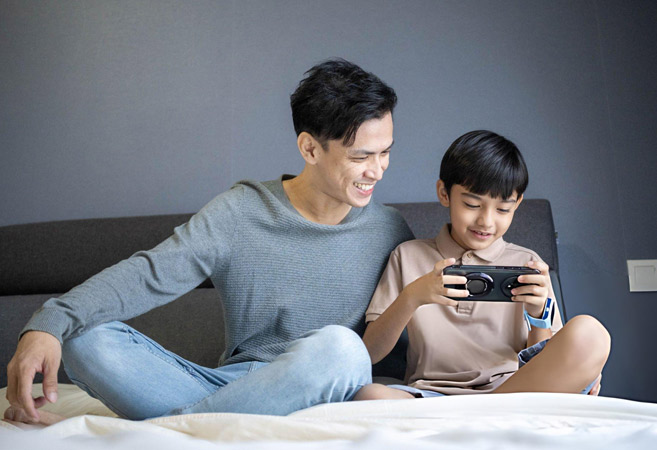
When practical, co-viewing or co-playing can make screen use more interactive. For younger children, watching together allows parents to explain what is happening, ask questions and connect digital content with real-world experiences.
For example, instead of simply allowing a child to watch an educational video about animals, parents can discuss the animals afterwards, read a related book or visit a zoo. This helps turn passive screen use into an opportunity for conversation and learning.
Suddenly removing a device can trigger frustration, particularly if a child is accustomed to unrestricted access. A gradual and predictable approach may work better.
Tell your child how long they can use the device and what will happen afterwards. For example:
“You can play for 30 minutes. When the timer rings, we will have dinner.”
Children may become frustrated when screen time ends unexpectedly. A five- or ten-minute warning can help them prepare to stop.
If a rule applies on most days, try to apply it consistently. Children are more likely to understand boundaries when they are predictable.
Children notice how adults use devices. If parents regularly check their phones during meals or conversations, children may find it difficult to understand why they are expected to put their own devices away. Consider creating family-wide screen-free periods.
For babies and toddlers, direct interaction is particularly important. Instead of relying on screens to occupy a young child, offer opportunities to:
WHO recommends no sedentary screen time for infants and 1-year-olds, while screen time for 2-year-olds should be limited to no more than one hour per day, with less being better. If screens are occasionally used to keep a child occupied, parents should not feel guilty. The important consideration is the child’s overall daily routine.
There is no single symptom that proves a child is using screens too much. However, parents may want to reassess screen habits if screen use is consistently associated with:
The important question is whether screen use is interfering with everyday life. If a child’s behaviour, sleep, mood, physical activity or school performance is being significantly affected, discuss your concerns with a paediatrician or other healthcare professional.
Every family is different, so your screen-time rules should be realistic for your circumstances. A simple family plan might include:
The aim is not perfection. It is to create a routine in which screens have an appropriate place without dominating the child’s day.
How much screen time is appropriate for children depends on their age and daily routine. The WHO recommends no sedentary screen time for children under 2 and no more than one hour a day for children aged 2 to 4, with less being better. For children aged 5 to 17, some guidelines recommend limiting recreational screen time to around two hours a day. However, healthy screen use is not only about counting hours. What children watch, when they use screens and what screen time replaces are also important. Aim for a balanced routine that prioritises sleep, physical activity, learning, play and family time. If screen use is affecting your child’s sleep, behaviour, development or wellbeing, speak with a paediatrician or healthcare professional.
Medical disclaimer: This article is intended for general health education and does not replace professional medical advice, diagnosis or treatment. Screen-time recommendations can vary by age, country and individual circumstances. Children with developmental, behavioural or medical needs may require personalised guidance from a healthcare professional.
Recommendations depend on age. WHO recommends no sedentary screen time for infants and 1-year-olds, and no more than one hour per day for children aged 2-4, with less being better. For older children, recommendations often focus on balancing recreational screen time with sleep, physical activity and other daily activities.
It depends on the child’s age and what the screen time involves. Two hours of recreational screen use may exceed recommendations for younger children, while some guidelines use two hours as a maximum for recreational screen time among children aged 5-17. Parents should also consider whether screen use is affecting sleep, exercise, schoolwork or family life.
It is generally better to avoid recreational screen use close to bedtime. The American Academy of Pediatrics recommends turning off screens at least one hour before bedtime and keeping screens out of children’s bedrooms, particularly at night.
Educational content can be useful, particularly when it is age-appropriate and supported by adult interaction. However, screen-based learning should not replace sleep, physical activity, hands-on play, reading and face-to-face interaction.
Set predictable limits, establish screen-free times and offer appealing alternatives such as outdoor play, sports, books, creative activities and family games. Give children advance warnings before screen time ends and try to model healthy device habits yourself.
Spread the love, follow us on our social media channels