

Appointments
+(603) 5515 1966
General Line
+(603) 5515 1888

 October 20, 2026

Every second of every day, blood is moving through your body. It carries oxygen to your cells, delivers nutrients, transports hormones and helps remove waste. You rarely notice this constant movement—but without it, your organs could not function. The circulatory system, also called the cardiovascular system, is the body’s transport network. At its centre is the heart, a muscular pump that works continuously to move blood through an extensive network of blood vessels.
But how exactly does blood travel through the body? Why does it need to pass through the lungs? What is the difference between arteries and veins? And what happens when something goes wrong with this system? Understanding how your circulatory system works can make it easier to recognise why blood pressure, cholesterol, exercise, diet and other aspects of cardiovascular health matter.
The circulatory system is made up of three main components:
Together, these components maintain a continuous circulation between the heart, lungs and the rest of the body. The circulatory system works closely with other body systems, particularly the respiratory system. While your lungs bring oxygen into the body, your circulatory system transports that oxygen to tissues and carries carbon dioxide back to the lungs to be exhaled. The cardiovascular system also plays an important role in maintaining body temperature, delivering nutrients and removing waste.
Although the circulatory system may seem complicated, its basic structure is relatively straightforward.
The heart is a muscular organ located in the chest, between the lungs and slightly to the left of the breastbone. It has four chambers:
The right side of the heart primarily handles blood returning from the body and sends it to the lungs. The left side receives oxygen-rich blood from the lungs and pumps it to the rest of the body. Four main valves help keep blood moving in the correct direction:
These valves open and close with the heartbeat, preventing blood from flowing backwards.
Blood vessels form a vast network throughout the body. They include:
The National Heart, Lung, and Blood Institute describes arteries, veins and capillaries as the three main types of blood vessels in the cardiovascular system.
Blood does much more than simply carry oxygen. It contains:
Together, these components help maintain the body’s normal functions.
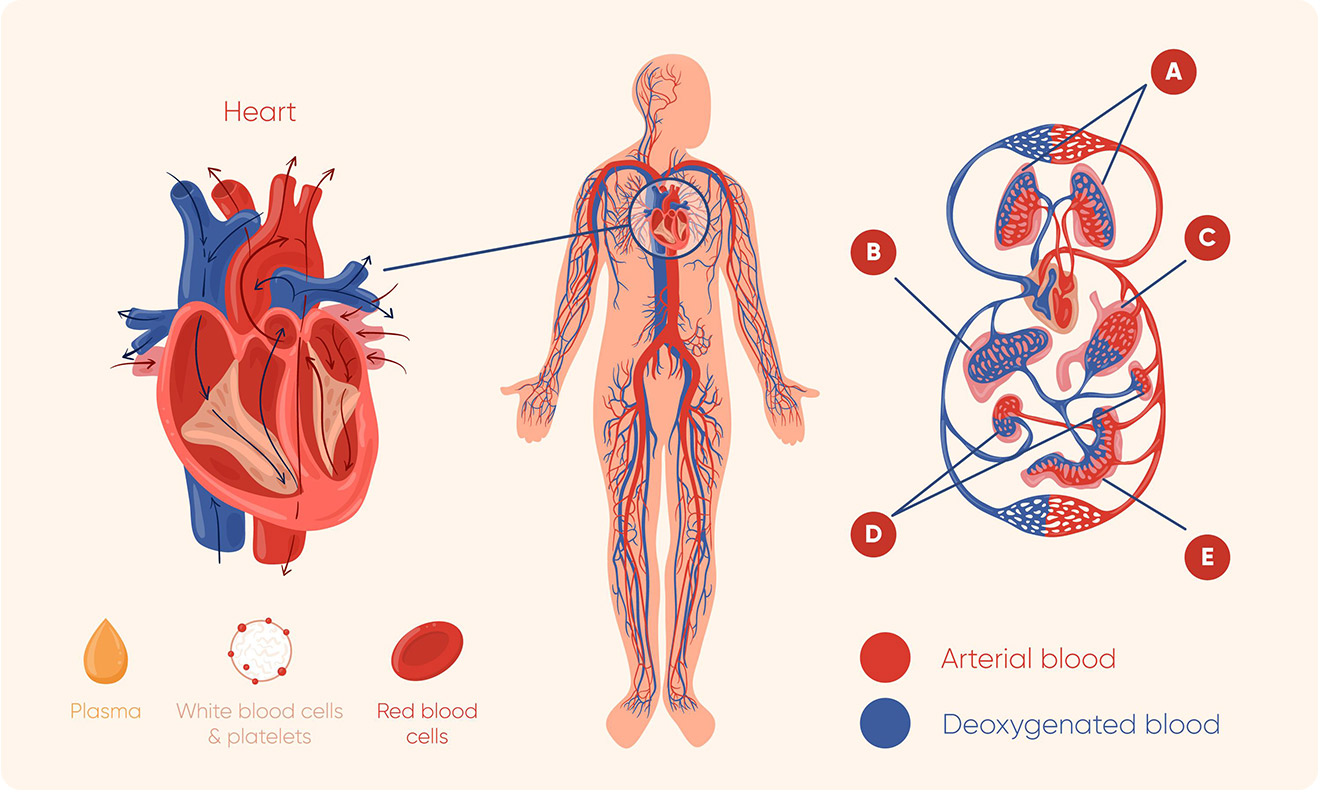
Blood circulation can be understood as a continuous loop involving the heart, lungs and body tissues. There are two major circuits: pulmonary circulation and systemic circulation.
After delivering oxygen to tissues throughout the body, blood becomes lower in oxygen and higher in carbon dioxide. This blood returns to the heart through veins. Two large veins – the superior vena cava and inferior vena cava – carry blood into the heart’s right atrium. The superior vena cava brings blood from the upper part of the body, including the head, neck and arms. The inferior vena cava returns blood from the lower body.
From the right atrium, blood moves through the tricuspid valve into the right ventricle. When the right ventricle contracts, it pushes blood through the pulmonary valve into the pulmonary arteries. The pulmonary arteries carry this oxygen-poor blood to the lungs. This is known as pulmonary circulation.
Inside the lungs, blood travels through tiny blood vessels surrounding the air sacs, known as alveoli. Here, an important exchange takes place:
The now oxygen-rich blood travels back towards the heart through the pulmonary veins.
Pulmonary veins carry oxygen-rich blood into the heart’s left atrium. The blood then passes through the mitral valve into the left ventricle. The left ventricle has a thick muscular wall because it needs to generate enough pressure to pump blood throughout the entire body.
When the left ventricle contracts, it pushes blood through the aortic valve and into the aorta, the body’s largest artery. From there, blood travels through progressively smaller arteries and arterioles before reaching capillaries throughout the body. This is called systemic circulation.
At the capillaries, oxygen and nutrients move from the blood into surrounding tissues. At the same time, carbon dioxide and other waste products produced by cells enter the bloodstream. The blood then moves into small veins, which join to form larger veins. Eventually, it returns to the heart – and the cycle starts again.
Thinking of circulation as two connected loops can make the process easier to understand.
Pulmonary circulation moves blood between the heart and lungs. Its main purpose is to remove carbon dioxide and replenish the blood with oxygen. The pathway is:
Systemic circulation moves oxygen-rich blood between the heart and the rest of the body. Its job is to deliver oxygen and nutrients to tissues and carry carbon dioxide and other waste products away. The pathway is:
Your heart beats because specialised electrical signals coordinate the contraction of its chambers. Each heartbeat consists broadly of two phases:
The electrical system of the heart normally begins each heartbeat in the sinoatrial (SA) node, sometimes called the heart’s natural pacemaker. The electrical signal then travels through the heart, coordinating its contractions so that blood moves efficiently from the atria into the ventricles and then out to the lungs and body. A normal resting heart rate for many adults is around 60 to 100 beats per minute, although individual heart rates can vary depending on factors such as fitness, medications, emotions and activity.
Arteries and veins are both blood vessels, but they have different roles.
| Feature | Arteries | Veins |
|---|---|---|
| Direction of blood flow | Away from the heart | Towards the heart |
| Typical oxygen level | Usually oxygen-rich | Usually oxygen-poor |
| Vessel walls | Thicker and more muscular | Thinner |
| Blood pressure | Higher | Lower |
| Valves | Generally absent | Many veins contain valves |
There are important exceptions to the oxygen rule. The pulmonary arteries carry oxygen-poor blood from the heart to the lungs, while the pulmonary veins carry oxygen-rich blood from the lungs back to the heart. This is why remembering their direction – rather than simply their oxygen content – is the most reliable way to distinguish arteries from veins.
Every time the heart pumps, blood pushes against the walls of your arteries. This force is called blood pressure. Blood pressure is recorded using two numbers:
For example, a reading of 120/80 mmHg means a systolic pressure of 120 and a diastolic pressure of 80. High blood pressure, or hypertension, often has no obvious symptoms. However, persistently high blood pressure can damage blood vessels and increase the risk of serious conditions such as heart disease, stroke and kidney disease. This is one reason regular health checks are valuable, even when you feel well.
Several conditions can interfere with healthy circulation.
Hypertension places additional strain on the heart and blood vessels. Over time, uncontrolled hypertension can contribute to damage involving the heart, brain, kidneys and eyes.
Atherosclerosis occurs when fatty deposits and other substances build up within artery walls, causing them to become narrowed or stiffened. If blood flow to the heart is restricted, it can contribute to coronary artery disease and heart attack. If blood flow to the brain is interrupted, it can contribute to stroke.
Coronary arteries supply blood to the heart muscle itself. When these arteries become narrowed or blocked, the heart may not receive enough oxygen-rich blood. Possible symptoms include chest discomfort or pressure, shortness of breath and unusual fatigue, although symptoms can vary.
Arrhythmias occur when the heart beats too quickly, too slowly or irregularly. Some are harmless, while others require medical assessment and treatment.
Blood clots can be dangerous when they form inappropriately or travel to another part of the body. A clot in a deep vein, known as deep vein thrombosis (DVT), may cause swelling, pain, tenderness or warmth, usually in one leg. If a clot travels to the lungs, it can cause a potentially life-threatening pulmonary embolism.
Your cardiovascular health is influenced by many factors, including age, genetics and existing medical conditions. However, everyday habits also matter.
Regular physical activity helps support heart health, circulation and overall fitness. Adults should aim for a combination of aerobic activity and muscle-strengthening activities according to their health status and abilities. If you have an existing heart or medical condition, ask your healthcare professional what level of exercise is appropriate for you.
A balanced diet can support cardiovascular health. Focus on a variety of vegetables and fruits, whole grains, legumes and other nutrient-rich foods, while limiting excessive salt, saturated fats, trans fats and highly processed foods.
Smoking damages blood vessels and significantly increases cardiovascular risk. Stopping smoking is one of the most important steps a person can take to protect heart and blood vessel health.
Carrying excess weight can increase the risk of conditions such as high blood pressure, diabetes and heart disease. Even modest improvements in weight, physical activity and diet can contribute to better cardiovascular health.
Regularly checking important health measures – including blood pressure, blood glucose and cholesterol where appropriate – can help identify cardiovascular risk factors early. Don’t wait until you experience symptoms before paying attention to your heart health.
Some circulatory problems develop silently, while others cause sudden and serious symptoms. Seek emergency medical attention if you experience symptoms such as:
These symptoms can be signs of a heart attack, stroke or another medical emergency. For non-emergency concerns, arrange a medical assessment if you have persistent chest discomfort, unexplained breathlessness, recurring palpitations, unusual swelling in the legs, consistently high blood pressure or other symptoms that concern you.
Your circulatory system is an extraordinary transport network that operates continuously, moving blood from the heart to the lungs and throughout the body before returning it to the heart again. The basic journey is simple to remember:
With every cycle, blood delivers oxygen and nutrients, collects waste products and helps keep your organs functioning. Taking care of your circulation means taking care of your overall health. Regular physical activity, a balanced diet, avoiding smoking, maintaining a healthy weight and monitoring important health measurements can all contribute to a healthier cardiovascular system. Most importantly, don’t ignore persistent or concerning symptoms. Early assessment can help identify cardiovascular problems before they become more serious.
Medical Disclaimer:This article is intended for general health education and does not replace professional medical advice, diagnosis or treatment. If you have symptoms that concern you or have been diagnosed with a cardiovascular condition, consult a qualified healthcare professional for individual advice. In an emergency, seek immediate medical attention.
The exact time varies depending on factors such as heart rate, activity level and circulation. Under typical resting conditions, blood can complete a circuit through the cardiovascular system relatively quickly – often within about a minute.
They are closely related terms. Blood flow refers to the movement of blood through a particular vessel or area, while circulation describes the continuous movement of blood throughout the cardiovascular system.
Arteries carry blood away from the heart under relatively high pressure. Their thicker, more muscular walls help them withstand and regulate this pressure. Veins operate under lower pressure and often contain valves that help prevent blood from flowing backwards.
It can. Symptoms such as persistent coldness, numbness, pain, skin colour changes or swelling in the limbs may sometimes be associated with circulation problems. However, these symptoms can have many causes, so a medical assessment is needed to determine the underlying issue.
Regular health assessments can include measurements such as blood pressure, cholesterol and blood glucose, alongside an assessment of your medical history and lifestyle. Your doctor can recommend additional tests based on your age, risk factors and symptoms.
Spread the love, follow us on our social media channels