

Appointments
+(603) 5515 1966
General Line
+(603) 5515 1888

 October 15, 2026

Cancer treatment has traditionally relied on approaches such as chemotherapy, radiotherapy and surgery. Today, advances in immunotherapy are opening new possibilities by using the body’s own immune system to fight cancer.
One of the most innovative approaches is CAR T-cell therapy. This personalised treatment modifies a patient’s own immune cells so they can recognise and attack cancer cells more effectively. For some people with certain blood cancers, CAR T-cell therapy can produce deep and long-lasting responses, including in cancers that have returned or stopped responding to other treatments. However, CAR T-cell therapy is a complex treatment and is not suitable for every patient. It can also cause serious side effects that require close medical monitoring.
Understanding how CAR T-cell therapy works, its potential benefits and risks, and what the treatment journey involves can help patients and families prepare for discussions with their cancer care team.
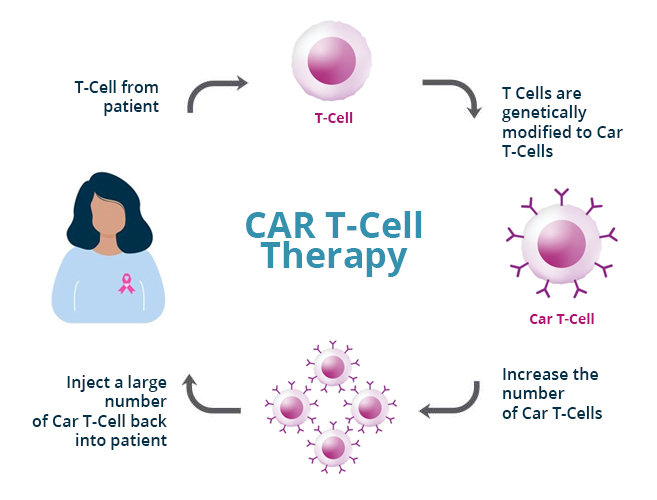
CAR T-cell therapy, short for chimeric antigen receptor T-cell therapy, is a form of cancer immunotherapy. T cells are a type of white blood cell that play an important role in the immune system. Normally, they help identify and destroy abnormal cells. Some cancer cells, however, can avoid detection or suppress the immune response.
CAR T-cell therapy changes a patient’s T cells in a laboratory. The cells are genetically modified to produce a chimeric antigen receptor (CAR) on their surface. This receptor is designed to recognise a specific protein, or antigen, on cancer cells. Once returned to the patient’s body, these engineered T cells can recognise cells carrying the target antigen and attack them. Because the treatment uses the patient’s own immune cells, CAR T-cell therapy is sometimes described as a personalised or “living” cancer treatment.
CAR T-cell therapy is currently used primarily for certain blood cancers, rather than most solid tumours.Depending on the specific CAR T-cell product and the patient’s circumstances, approved treatments may be used for certain types of:
The exact indications vary between CAR T-cell products and countries, and approvals continue to evolve. CAR T-cell therapy is also being investigated in clinical trials for other cancers, including some solid tumours. However, these uses may still be experimental and should not be considered established treatments. Your oncologist will determine whether CAR T-cell therapy is an appropriate option based on your cancer type, previous treatments, disease status and overall health.
CAR T-cell therapy involves several important steps. Unlike a conventional medicine that can be administered immediately, producing personalised CAR T cells takes time.
The process begins with leukapheresis, a procedure that collects blood and separates T cells from the other blood components. The remaining blood components are returned to the patient.
The collected T cells are sent to a specialised laboratory. They are genetically modified so that they produce the CAR receptor designed to recognise a particular cancer antigen.
The modified T cells are grown in the laboratory until there are enough cells for treatment. The entire manufacturing process can take several weeks.
Before the CAR T cells are infused, patients generally receive a short course of chemotherapy called lymphodepleting chemotherapy. This helps create an environment in which the infused CAR T cells can expand and function effectively.
The engineered cells are returned to the patient through an intravenous infusion. Unlike a typical course of chemotherapy, the CAR T cells may continue multiplying inside the body after infusion and can remain active for an extended period.
Close monitoring is essential after treatment. Patients may need to remain in hospital or stay close to the treatment centre for a period of time so the medical team can quickly identify and treat potential complications.
CAR T-cell therapy has transformed treatment options for some people with difficult-to-treat blood cancers.
Rather than relying solely on conventional anti-cancer drugs, CAR T-cell therapy harnesses and modifies the patient’s own T cells to target cancer.
Some patients with advanced or treatment-resistant blood cancers have experienced deep responses following CAR T-cell therapy. In certain cases, responses can be long-lasting.
For selected patients whose cancer has returned or stopped responding to previous treatments, CAR T-cell therapy may provide another potentially effective treatment option. However, it is important to understand that CAR T-cell therapy does not work for everyone. Cancer can sometimes return after an initial response, and researchers continue to study why some cancers resist or eventually escape CAR T-cell treatment.
CAR T-cell therapy can cause significant side effects because the treatment deliberately activates the immune system. The most important complications include cytokine release syndrome (CRS) and immune effector cell-associated neurotoxicity syndrome (ICANS).
Cytokine release syndrome occurs when activated immune cells release large amounts of cytokines, chemical messengers that help regulate immune responses. CRS can cause:
Many cases are mild, but severe CRS can become life-threatening and requires prompt medical treatment. Doctors have treatments available to manage CRS, including medicines such as tocilizumab and, when appropriate, corticosteroids.
CAR T-cell therapy can also cause neurological problems, collectively referred to as ICANS. Symptoms may include:
These symptoms require immediate medical attention and careful monitoring.
CAR T-cell therapy and the chemotherapy given before infusion can temporarily weaken the immune system. Patients may be more vulnerable to infections and may require preventive medicines, monitoring and other supportive care. Some CAR T-cell treatments can also reduce normal B cells, which can affect antibody production and increase susceptibility to certain infections.
Low levels of red blood cells, white blood cells and platelets can occur following treatment. This can contribute to fatigue, infection risk or bleeding risk and may require monitoring and supportive treatment.
Because CAR T cells are designed to recognise specific antigens, they can sometimes affect normal cells that carry the same target antigen. The resulting effects depend on the particular CAR T-cell therapy and its target.
There is also a very rare but important long-term concern involving secondary cancers. The FDA has investigated reports of T-cell cancers following certain CAR T-cell therapies. Current evidence indicates that such cancers are rare, but this potential risk is one reason long-term follow-up is important.
The period immediately after infusion is an important part of the treatment journey.
Your healthcare team will monitor you closely for signs of CRS, neurological changes, infection, changes in blood pressure and other complications.
The length of hospitalisation varies depending on the CAR T-cell product, the patient’s condition and how they respond to treatment. Some patients may require intensive monitoring or treatment if significant side effects develop.
Even after leaving hospital, recovery continues. Patients may be asked to:
Your treatment centre will provide specific instructions because recovery requirements vary.
CAR T-cell therapy is not automatically appropriate for everyone with cancer. The cancer care team may consider factors such as:
Because CAR T-cell therapy requires specialised manufacturing and treatment facilities, patients are generally treated at specialised centres with appropriate expertise and resources.
If CAR T-cell therapy has been recommended or is being considered, it can help to prepare questions before your appointment. Consider asking:
Having a family member or caregiver attend appointments can also be helpful, particularly because the treatment process involves a considerable amount of information.
CAR T-cell therapy can lead to long-lasting remission in some patients, and some people may remain free of detectable disease for years. However, it is not accurate to describe CAR T-cell therapy as a guaranteed cure. Its effectiveness depends on the type of cancer, the specific CAR T-cell product, disease characteristics and individual patient factors. Some cancers respond very well, while others may not respond or may eventually return. Research is continuing to improve CAR T-cell therapy, make it safer and extend its use to more cancer types.
CAR T-cell therapy is an advanced personalised immunotherapy that uses a patient’s own T cells, modified to recognise and attack cancer cells. It is used for selected blood cancers, particularly when the disease has returned or has not responded to previous treatments.
The treatment involves collecting and modifying T cells, preparing the patient with chemotherapy, and then infusing the engineered cells back into the body. While CAR T-cell therapy can achieve significant and lasting responses, it may cause serious side effects, including cytokine release syndrome and neurological complications. Close monitoring by an experienced cancer care team is essential. If CAR T-cell therapy is being considered, speak with your oncologist about its potential benefits, risks, alternatives and treatment process.
Medical disclaimer: This article is intended for general health education and does not replace personalised medical advice, diagnosis or treatment. CAR T-cell therapy is a specialised cancer treatment, and eligibility, benefits, risks and treatment protocols vary between patients and treatment centres. Always discuss your individual circumstances with your oncologist or qualified healthcare team.
No. CAR T-cell therapy is a type of cellular immunotherapy, not conventional chemotherapy. However, patients generally receive chemotherapy before the CAR T-cell infusion to prepare the body for the engineered cells.
The overall process can take several weeks because the patient’s T cells need to be collected, genetically modified and expanded in a specialised laboratory. NCI notes that the manufacturing process from collection to infusion is currently around three to five weeks in many cases, although individual timelines vary.
The cell collection and infusion are performed through intravenous access. Some patients experience discomfort related to intravenous procedures or the treatment process, while side effects after infusion can include fever, chills, fatigue and other symptoms. Your care team will provide medicines and supportive care as needed.
Some side effects are mild, but others can be serious or life-threatening. Cytokine release syndrome and neurological toxicity are among the most important complications. This is why patients require close monitoring following infusion.
Yes. Although some patients achieve long-lasting remission, CAR T-cell therapy does not guarantee that cancer will not return. Your oncology team will monitor your response and discuss follow-up care and options if the disease returns.
Spread the love, follow us on our social media channels